

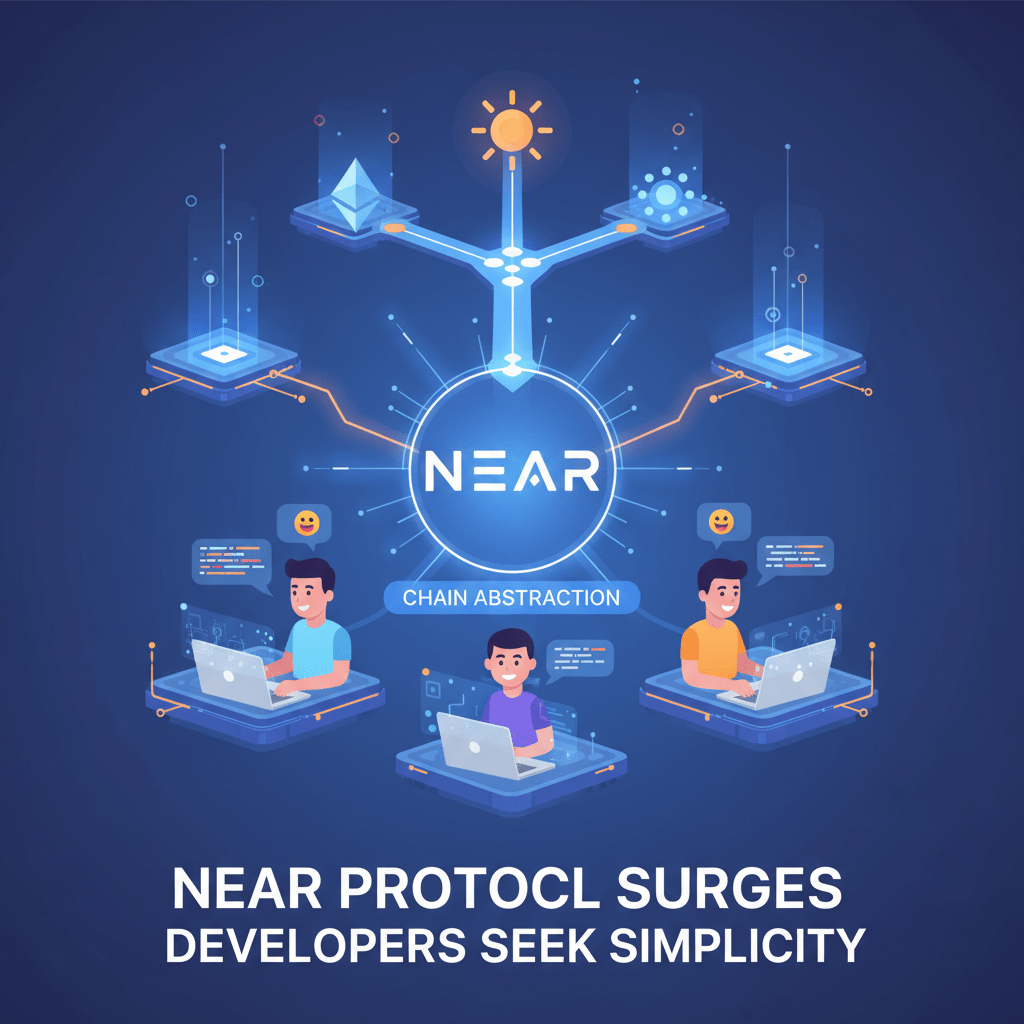
Near Protocol is gaining momentum as one of the industry’s most developer-friendly ecosystems, thanks to its ambitious “chain abstraction” strategy. While many blockchains focus on raw throughput or niche execution environments, Near is focused on solving one of Web3’s deepest problems: complexity.
For the average user, interacting with blockchain applications requires juggling private keys, gas fees, addresses, and multi-chain navigation. Near’s leadership argues that this complexity is the single largest barrier to mainstream adoption. Their proposed solution is chain abstraction—a model in which users no longer need to understand the underlying blockchain at all. Instead, applications handle the complexity, enabling seamless access to multi-chain environments.
Over the past year, Near has released a series of tools and protocols aimed at making chain abstraction a reality. Key improvements include simplified account systems, gas fee sponsorship models, user-friendly wallet abstraction, and cross-chain communication layers that allow apps to function across multiple blockchains without requiring users to switch networks.
Developers have responded positively. Near’s ecosystem is attracting builders from Ethereum, Solana, and Cosmos who are frustrated with the complexities of traditional multi-chain development. These developers value Near’s fast finality, low fees, and intuitive SDKs.
Near’s push into AI-integrated blockchain solutions has also brought new attention. The protocol is exploring applications where AI agents can interact with smart contracts autonomously, potentially opening the door to automated on-chain operations in finance, gaming, governance, and digital identity.
While Near still faces stiff competition from ecosystems with larger developer bases, its strategy of simplifying user experience could prove decisive. If chain abstraction becomes the dominant model for Web3, Near Protocol may become one of the most widely adopted platforms in the industry.
About the Author