

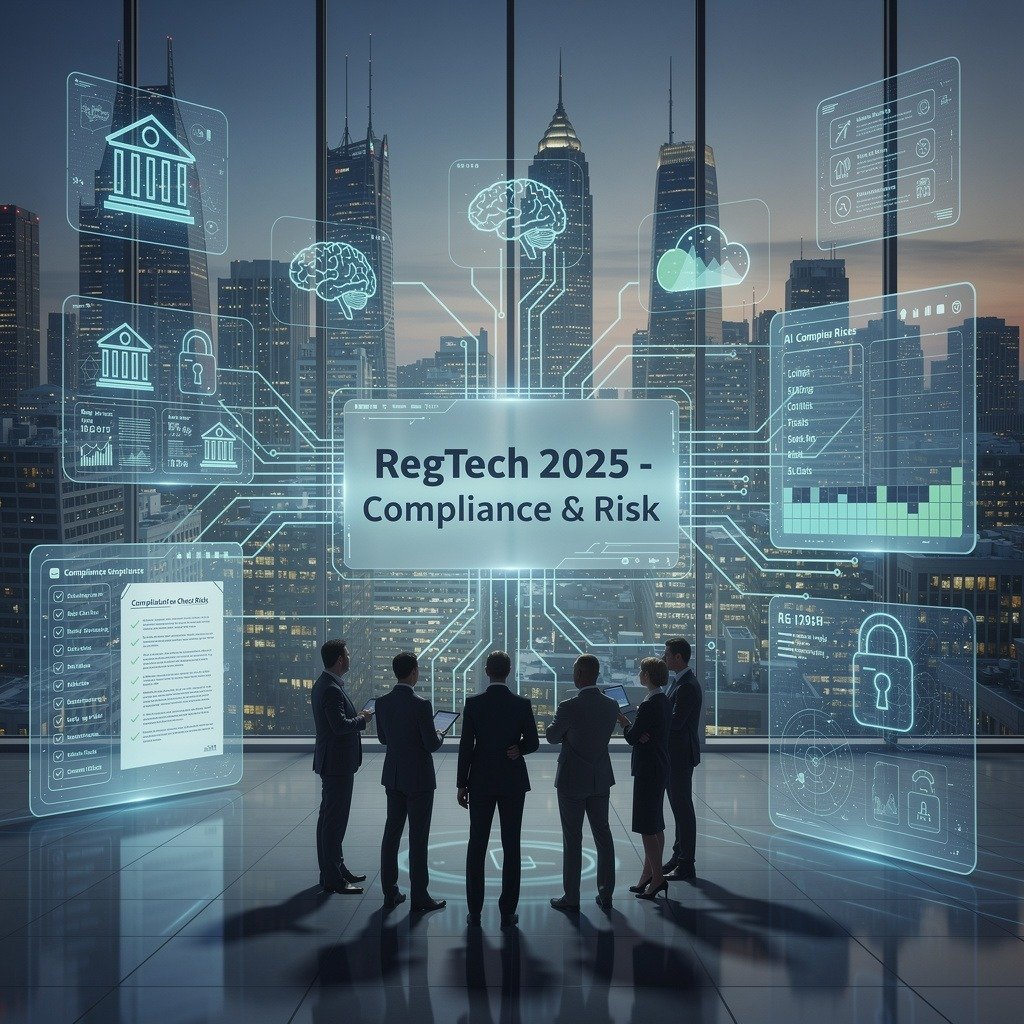
The rise of fintech in 2025 has brought not only innovation and convenience but also complex regulatory challenges. As digital payments, AI-driven banking, and embedded finance proliferate, financial institutions face unprecedented pressure to comply with evolving regulations while managing operational risks. Enter RegTech—regulatory technology—a sector designed to help banks, fintech firms, and corporations navigate compliance efficiently and cost-effectively. In 2025, RegTech is no longer a niche solution; it is a critical component of the modern financial infrastructure.
RegTech leverages cloud computing, artificial intelligence, machine learning, and big data analytics to automate regulatory compliance processes. Tasks that once required thousands of human hours, such as transaction monitoring, anti-money laundering (AML) checks, know-your-customer (KYC) verification, and reporting, are now largely automated. This not only reduces costs but also increases accuracy, speed, and transparency, allowing financial institutions to focus on innovation rather than administrative burden.
One of the most significant applications of RegTech is in fraud detection and AML compliance. Traditional rule-based systems often generated false positives, delaying transactions and frustrating consumers. Today, AI-powered RegTech solutions analyze millions of transactions in real time, identifying unusual patterns, potential fraud, or suspicious behavior with remarkable precision. By learning from historical data and continuously adapting to new threats, these systems minimize human error while enhancing financial security.
KYC processes have also been transformed. Biometric verification, digital identity frameworks, and AI-driven document analysis allow institutions to onboard customers in minutes rather than days. This capability is especially vital for fintech companies serving emerging markets, where traditional identification infrastructure is limited. By streamlining KYC and onboarding, RegTech fosters financial inclusion while ensuring regulatory compliance.
RegTech also enables continuous monitoring and reporting to regulators. Instead of periodic audits and manual reporting, financial institutions can provide regulators with real-time dashboards, automated alerts, and compliance logs. This transparency reduces regulatory friction, enhances trust, and allows authorities to respond swiftly to potential risks. Countries that have adopted centralized regulatory platforms, such as Singapore and the UAE, are now seeing more proactive and preventive regulation rather than reactive enforcement.
Beyond compliance, RegTech is shaping risk management strategies. Financial institutions use predictive analytics to anticipate credit defaults, liquidity risks, and market exposure. AI-driven models can simulate stress scenarios, optimize capital allocation, and evaluate operational vulnerabilities. By integrating RegTech with risk management, companies create a more resilient financial system capable of withstanding shocks while maintaining customer trust.
The synergy between RegTech and embedded finance is particularly notable. As financial services are increasingly integrated into non-financial platforms, ensuring compliance across multiple channels becomes essential. RegTech solutions embedded within apps can monitor transactions, detect suspicious activity, and enforce limits automatically, enabling seamless yet compliant financial experiences. This combination of convenience and oversight exemplifies the modern fintech ecosystem.
Global adoption of RegTech is accelerating. Europe remains a leader, with PSD2 and GDPR driving innovations in compliance automation and data privacy. North America is rapidly embracing AI-driven regulatory solutions for banking, insurance, and investment services. In Asia, fintech-heavy markets such as China, India, and Singapore are pioneering digital identity frameworks, e-KYC, and transaction monitoring platforms, ensuring compliance without hindering growth.
Despite its promise, RegTech faces challenges. Integrating diverse systems across banks, fintechs, and regulators can be complex, especially when legacy infrastructure remains in place. Cybersecurity is critical, as RegTech platforms handle sensitive customer and financial data. Additionally, transparency in AI decision-making is essential; regulators and consumers alike demand explainable models to understand compliance actions and risk assessments.
Ethical considerations are emerging as well. As AI models automate regulatory enforcement, institutions must ensure that algorithms do not inadvertently discriminate or penalize certain customer groups. Oversight frameworks are being developed to audit AI systems regularly, ensuring fairness, accountability, and transparency.
RegTech’s impact on costs and efficiency is already substantial. Financial institutions report significant reductions in manual compliance workloads, fewer regulatory penalties, and faster onboarding cycles. Smaller fintech companies, previously daunted by complex regulatory landscapes, can now compete on equal footing with legacy banks, leveling the playing field while maintaining rigorous standards.
Looking forward, RegTech is expected to evolve into integrated regulatory ecosystems encompassing not only banking but also insurance, investments, and broader financial markets. Real-time collaboration between regulators, banks, and fintechs will become the norm, creating a predictive, adaptive, and transparent regulatory environment. This evolution promises to foster innovation without compromising consumer protection or financial stability.
In conclusion, RegTech represents a critical intersection of technology, compliance, and risk management. In 2025, it is not merely a supporting tool but a strategic enabler of modern finance. By automating compliance, enhancing risk monitoring, and integrating seamlessly with digital financial ecosystems, RegTech is ensuring that the rapid growth of fintech remains safe, accountable, and sustainable. The industry’s future depends on its ability to balance innovation with regulation, and RegTech is leading the way.
About the Author