

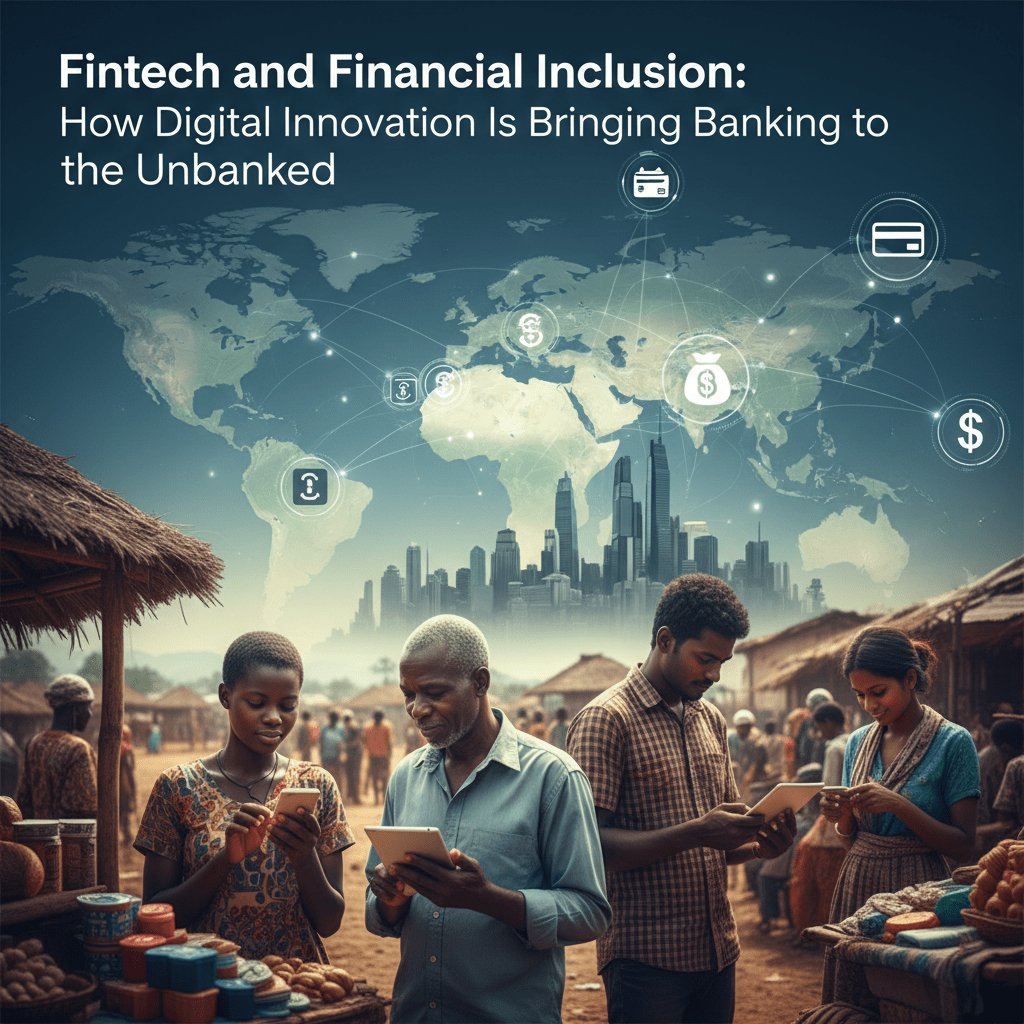
In 2025, financial inclusion is no longer an abstract policy goal—it is a measurable outcome driven by fintech innovation. For decades, billions of people around the world lived outside the formal financial system, excluded by geography, documentation barriers, high fees, or lack of trust in traditional banks. Today, fintech is rewriting that reality, bringing accessible, affordable, and digital financial services to populations once considered unreachable.
The transformation began with mobile technology. As smartphone penetration increased and mobile internet became more affordable, fintech companies identified a historic opportunity: deliver banking services without physical branches. In regions where bank infrastructure was sparse or nonexistent, digital wallets and mobile money platforms emerged as lifelines. Services like M-Pesa in Kenya, GCash in the Philippines, and bKash in Bangladesh demonstrated that financial inclusion could scale rapidly when technology met real-world needs.
By 2025, these early models have evolved into full financial ecosystems. Users can store money, pay bills, receive salaries, access credit, purchase insurance, and invest—all through a mobile device. The shift has been especially transformative for rural communities, informal workers, and small entrepreneurs who previously relied on cash-based systems vulnerable to theft, loss, and inefficiency.
A critical enabler of this inclusion has been alternative data and AI-driven credit assessment. Traditional banks historically denied loans to individuals without formal credit histories, stable employment records, or collateral. Fintech lenders now evaluate creditworthiness using real-time behavioral data—transaction patterns, mobile usage, bill payments, and even supply-chain activity for small merchants. This approach has unlocked credit access for millions, allowing micro-entrepreneurs to expand businesses, farmers to invest in equipment, and families to manage financial shocks.
Governments and regulators have played a key role in this expansion. Digital identity programs, such as India’s Aadhaar or various national ID initiatives across Africa and Southeast Asia, have enabled secure onboarding at scale. Combined with e-KYC technologies, fintech platforms can verify users in minutes rather than weeks. This regulatory alignment has created an environment where inclusion does not come at the cost of security or compliance.
Remittances represent another major breakthrough. Migrant workers have long faced high fees and long delays when sending money home. Fintech-powered remittance platforms now enable near-instant cross-border transfers at a fraction of the cost charged by traditional providers. For developing economies, these remittance flows are lifelines—supporting education, healthcare, and local investment. Lower fees mean more money reaches families, amplifying economic impact at the grassroots level.
Women have been among the biggest beneficiaries of fintech-driven inclusion. In many regions, cultural or legal barriers limited women’s access to banking services. Mobile wallets and digital savings platforms allow women to control finances independently, build credit histories, and participate more actively in local economies. Fintech is increasingly recognized as a tool for gender empowerment, enabling financial autonomy at scale.
Insurance technology, or insurtech, is also contributing to inclusion. Micro-insurance products embedded into mobile platforms provide affordable coverage for health, agriculture, and life risks. Farmers can insure crops against climate volatility, while gig workers gain access to basic health protection. These products, priced dynamically and distributed digitally, were impossible to deliver efficiently through traditional channels.
Despite these gains, challenges remain. Digital literacy gaps persist, particularly among older populations. Infrastructure reliability—such as electricity and internet access—can still limit adoption in some regions. Cybersecurity risks grow as more users entrust digital platforms with their savings. Fintech companies are responding with education initiatives, offline-compatible apps, biometric security, and community partnerships designed to build trust.
By 2025, the narrative around financial inclusion has shifted. It is no longer about charity or aid—it is about sustainable, technology-driven participation in the global economy. Fintech has proven that inclusion can be profitable, scalable, and transformative. As digital finance continues to evolve, the unbanked are no longer on the margins of the financial system—they are becoming active participants shaping its future.
About the Author