

Altcoin Liquidity Crisis Moves From Theory to Market Reality
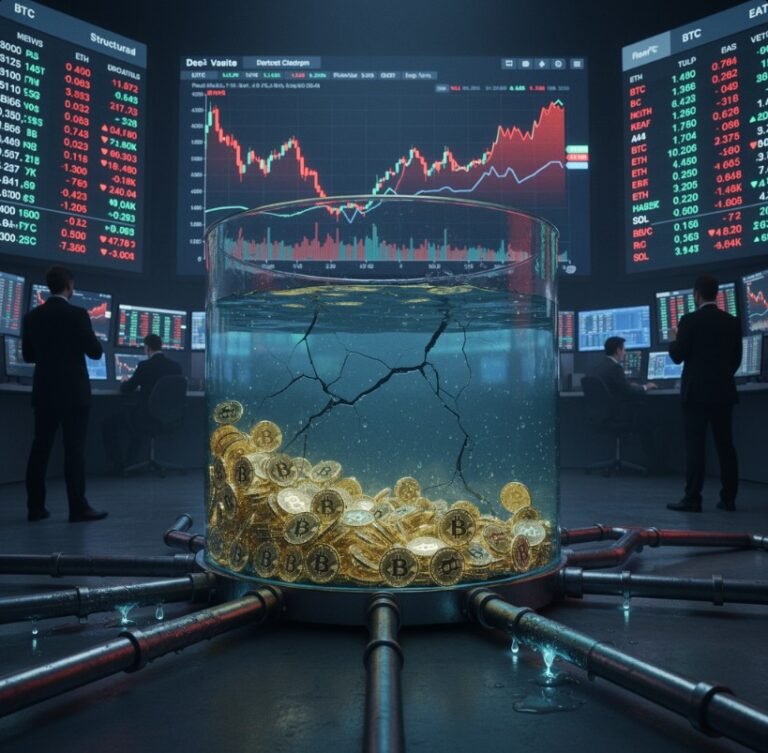
The altcoin liquidity crisis has become one of the most closely watched developments in digital assets as geopolitical risk, energy-market disruption, and tighter institutional risk controls converge across global markets. For years, altcoins were often discussed through the lens of innovation, network growth, and speculative cycles. However, the latest market environment has forced traders, exchanges, funds, and policymakers to focus on a more basic question: whether secondary crypto assets can maintain orderly trading when global stress rises.
That question has become more urgent during the U.S.-Iran conflict. Oil markets have reacted sharply to disruption fears around the Strait of Hormuz, one of the world’s most important energy transit routes. Reuters reported that analysts raised oil forecasts after Brent crude moved above $120 per barrel amid expectations of prolonged disruption, while AP reported that the conflict has clouded the U.S. economic outlook through higher energy costs and inflation pressure. Those developments matter for crypto because altcoins remain highly sensitive to liquidity conditions, risk appetite, and leverage.
In this environment, Bitcoin has continued to act as the market’s primary liquidity anchor. Ether, Solana, XRP, BNB, and other large tokens have remained tradeable, but smaller assets have faced a more difficult test. As investors reduce exposure to volatile assets, capital tends to move toward the deepest markets first. Therefore, the current episode is not only a price correction story. It is also a structural examination of how altcoin markets behave when macro risk moves faster than crypto-native narratives.
Oil Shock Turns Crypto Into a Macro Asset Class
The war-related oil shock has changed how investors frame crypto risk. In calmer periods, altcoin markets often respond to network upgrades, token unlock schedules, exchange listings, developer activity, and sector-specific trends such as decentralized finance or gaming. During geopolitical stress, however, those narratives can lose influence as macro variables dominate.
Higher oil prices can affect digital assets through several channels. First, they can raise inflation expectations. Second, they can reduce consumer spending power. Third, they can make central banks more cautious about cutting interest rates. Finally, they can push investors away from long-duration and high-volatility assets. Altcoins sit near the riskier end of that spectrum because many rely on future adoption assumptions rather than current cash flow.
Recent crypto trading reflected that pressure. CoinDesk reported that Bitcoin, Ether, and Solana fell as oil jumped on renewed U.S.-Iran war risks. Ether slipped, Solana weakened, and the broader market traded defensively even though the losses were not disorderly. The move showed how quickly digital assets can respond to energy shocks and geopolitical headlines.
The important detail is not simply that prices moved lower. Instead, it is that the market response showed a clear hierarchy. Bitcoin absorbed the first wave of selling better than most altcoins because it has deeper liquidity, stronger institutional channels, and a larger derivatives market. Ether remained central because of its role in DeFi and tokenized finance. Solana and XRP continued to attract attention, but their price action showed that even large altcoins are not immune when global investors reduce risk.
Institutional Traders Are Separating Altcoins by Quality
The altcoin market is no longer moving as one block. During earlier cycles, capital often rotated broadly from Bitcoin into nearly every major crypto segment. That pattern still appears during speculative rallies, but the current environment is more selective. Institutions and professional traders are increasingly distinguishing between liquid, regulated, and operationally mature tokens and smaller assets with weaker market depth.
This shift is visible in fund behavior. Financial News reported that a crypto hedge fund founded by a former Balyasny money manager gained 17% through April 26, 2026, with performance driven by long and short positions in altcoins including Solana, XRP, and Dogecoin during volatile conditions. That example suggests that some professional investors are not abandoning altcoins entirely. Rather, they are trading them more selectively and using relative-value strategies instead of broad directional exposure.
At the same time, institutional demand remains uneven. Bitcoin-linked products have continued to attract the strongest flows, while Ethereum and other altcoin-linked exposures have faced more mixed demand. A market update from Caleb & Brown noted that digital asset investment products saw large inflows during a risk-on phase tied to optimism over Middle East tensions, but XRP and Solana recorded outflows. This divergence reinforces the idea that altcoin liquidity is becoming concentrated in fewer assets and fewer venues.
For exchanges, that creates both opportunity and risk. Large platforms can benefit from increased volatility because trading volumes often rise when uncertainty increases. However, they must also manage wider spreads, thinner order books, and liquidation cascades in smaller tokens. If market makers pull back, even moderate sell orders can move prices sharply. Consequently, exchanges are likely to prioritize tokens with stronger liquidity support, transparent supply schedules, and clearer compliance profiles.
Ethereum Remains Central, but Its Role Is Changing
Ethereum remains the most important altcoin ecosystem by developer activity, DeFi infrastructure, stablecoin settlement, and token issuance. Still, its market role has changed. Ether is no longer viewed only as a high-growth crypto asset. It is increasingly treated as a macro-sensitive asset that responds to interest rates, liquidity expectations, and institutional portfolio positioning.
That sensitivity became clear in 2026. Capital.com reported that Ether closed at about $2,316 on April 27, down sharply year to date but still higher year on year. The same report described a mixed technical picture after a difficult first quarter. Although price forecasts vary widely, the broader takeaway is that Ether has become more exposed to macro debates than many long-term supporters expected.
This matters for the altcoin liquidity crisis because Ether often serves as the bridge between Bitcoin and smaller tokens. When Ether performs well, risk appetite across DeFi, layer-2 networks, liquid staking, and application tokens usually improves. When Ether underperforms, liquidity often drains from those sectors first. Therefore, Ethereum’s relative weakness can become a transmission channel for broader altcoin stress.
However, Ethereum’s institutional position also gives it resilience. Its network remains deeply embedded in stablecoins, decentralized exchanges, tokenized assets, and custody infrastructure. During crisis periods, that utility can prevent the kind of complete liquidity withdrawal seen in smaller speculative tokens. As a result, Ether may continue to trade as a hybrid asset: risk-sensitive in price, but structurally important in market plumbing.
Solana and XRP Show the New Altcoin Divide
Solana and XRP have become important examples of how the altcoin market is evolving. Both assets have large communities, significant liquidity, and growing institutional visibility. Yet they serve different narratives. Solana is often associated with high-throughput applications, consumer crypto, decentralized exchanges, and fast settlement. XRP is more closely linked to payments, institutional transfer use cases, and regulated market access.
This distinction matters because investors are no longer rewarding altcoins simply for being alternatives to Bitcoin. They are asking whether each asset has a clear role in a stressed financial system. During a geopolitical crisis, an altcoin must offer more than a growth story. It needs liquidity, credible custody, exchange depth, regulatory clarity, and an identifiable user base.
That is why Solana and XRP continue to appear in institutional discussions even when smaller tokens struggle. Reuters reported earlier in 2026 that Morgan Stanley filed with the SEC to launch exchange-traded funds tied to Bitcoin and Solana, reflecting a broader move by major U.S. financial firms into digital assets. AP also reported in 2025 that a proposed Crypto Blue Chip ETF included Bitcoin, Ethereum, Solana, XRP, and Crypto.com’s token, showing how blue-chip crypto baskets were becoming part of the regulated product conversation.
Nevertheless, visibility does not remove risk. Solana remains vulnerable to changes in developer momentum, network competition, and speculative leverage. XRP remains exposed to regulatory interpretation, payment-sector adoption, and market concentration concerns. Both may survive liquidity shocks better than smaller tokens, but their performance will still depend heavily on macro stability and investor confidence.
Stablecoins Become the Escape Route
During periods of stress, stablecoins often become the bridge between crypto volatility and dollar liquidity. Traders use them to reduce exposure without leaving blockchain rails. Exchanges depend on them for settlement. DeFi protocols rely on them for collateral, lending, and liquidity pools. Therefore, stablecoin flows can reveal whether investors are exiting crypto entirely or simply waiting for better entry points.
The U.S.-Iran conflict has added another dimension to the stablecoin debate. Al Jazeera reported that U.S. and Iranian authorities are engaged in a crypto-related sanctions contest, with digital assets playing a role in efforts to move value around financial restrictions. This issue is politically sensitive because stablecoins and crypto payment rails can support legitimate commerce, but they can also attract sanctions scrutiny.
For altcoins, the implication is significant. If regulators increase pressure on exchanges, wallets, and stablecoin issuers during wartime, smaller tokens could face tighter access to liquidity. Large assets may remain supported by regulated venues, while less transparent tokens may become harder to trade. In that sense, compliance infrastructure is becoming a liquidity feature, not merely a legal requirement.
This development also affects DeFi. Many decentralized platforms depend on stablecoin liquidity to support trading and lending. If stablecoin issuers or centralized gateways tighten controls, DeFi liquidity can fragment. That does not mean DeFi disappears. However, it does mean that altcoin markets may become more dependent on trusted collateral, verified counterparties, and risk-managed pools.
Retail Traders Face a More Complex Market
Retail investors often experience liquidity stress later than professionals do. At first, prices may appear volatile but manageable. Then spreads widen, withdrawals slow, funding rates shift, and stop-loss orders execute at worse levels than expected. In smaller altcoins, the difference between quoted price and executable price can become painful during fast-moving markets.
This is why the current environment requires caution. A token may show strong percentage gains during a brief rebound, but that does not guarantee deep liquidity. In stressed conditions, investors need to consider whether they can exit a position without moving the market. They also need to understand unlock schedules, exchange concentration, derivative exposure, and market-maker participation.
The altcoin liquidity crisis is especially relevant for investors who rely on narratives alone. War risk, oil inflation, and central-bank uncertainty can overwhelm even strong project-level news. A protocol upgrade, partnership, or listing may still matter, but it may not offset a broad move out of risk assets.
As a result, the market is becoming less forgiving. Tokens with weak disclosure, thin liquidity, unclear revenue models, or unstable communities may face sharper drawdowns. Meanwhile, assets with real usage, credible teams, strong exchange access, and institutional custody support may recover faster when conditions improve.
Industry Response Moves Toward Risk Controls
Crypto firms are responding to the new environment by strengthening risk controls. Exchanges are likely to review margin requirements, collateral rules, listing standards, and market-maker obligations. Custodians are emphasizing segregation, reporting, and operational resilience. Asset managers are focusing on liquidity screens before adding altcoin exposure to client products.
This shift marks a maturation of the market. In earlier cycles, rapid listing and aggressive leverage helped drive activity. Now, the industry is being judged by its ability to remain functional during global stress. That requires conservative treasury management, stronger compliance systems, and transparent communication with users.
Regulators are also likely to watch more closely. During a war-related macro shock, officials may focus on sanctions compliance, consumer protection, market manipulation, and systemic risk. If altcoin markets show disorderly behavior, regulators could use the episode to justify stricter oversight. Conversely, if major platforms manage volatility effectively, the industry may strengthen its argument that regulated crypto markets can operate safely under pressure.
The result is a more disciplined altcoin sector. Growth is still possible, but it will likely be more concentrated. Projects that cannot show liquidity depth, real demand, and governance credibility may find it harder to attract capital.
Outlook: Altcoins Enter a Selective Era
The altcoin market is not collapsing, but it is changing. The U.S.-Iran conflict, oil-market disruption, and inflation uncertainty have exposed the difference between speculative liquidity and durable liquidity. Speculative liquidity appears when conditions are easy. Durable liquidity remains when conditions are difficult.
Bitcoin remains the benchmark asset. Ether remains the core infrastructure asset. Solana, XRP, and a small group of large tokens continue to compete for institutional relevance. However, the broader altcoin universe faces a more demanding test.
The next phase will depend on three factors. The first is whether the geopolitical crisis eases or continues to pressure energy markets. The second is whether central banks can manage inflation expectations without choking risk appetite. The third is whether crypto firms can maintain orderly markets as liquidity becomes more selective.
For investors, the message is clear. Altcoins can still offer exposure to blockchain innovation, but the market is no longer rewarding every risk equally. In a world shaped by war risk, oil shocks, and institutional discipline, liquidity has become the central story.
About the Author