

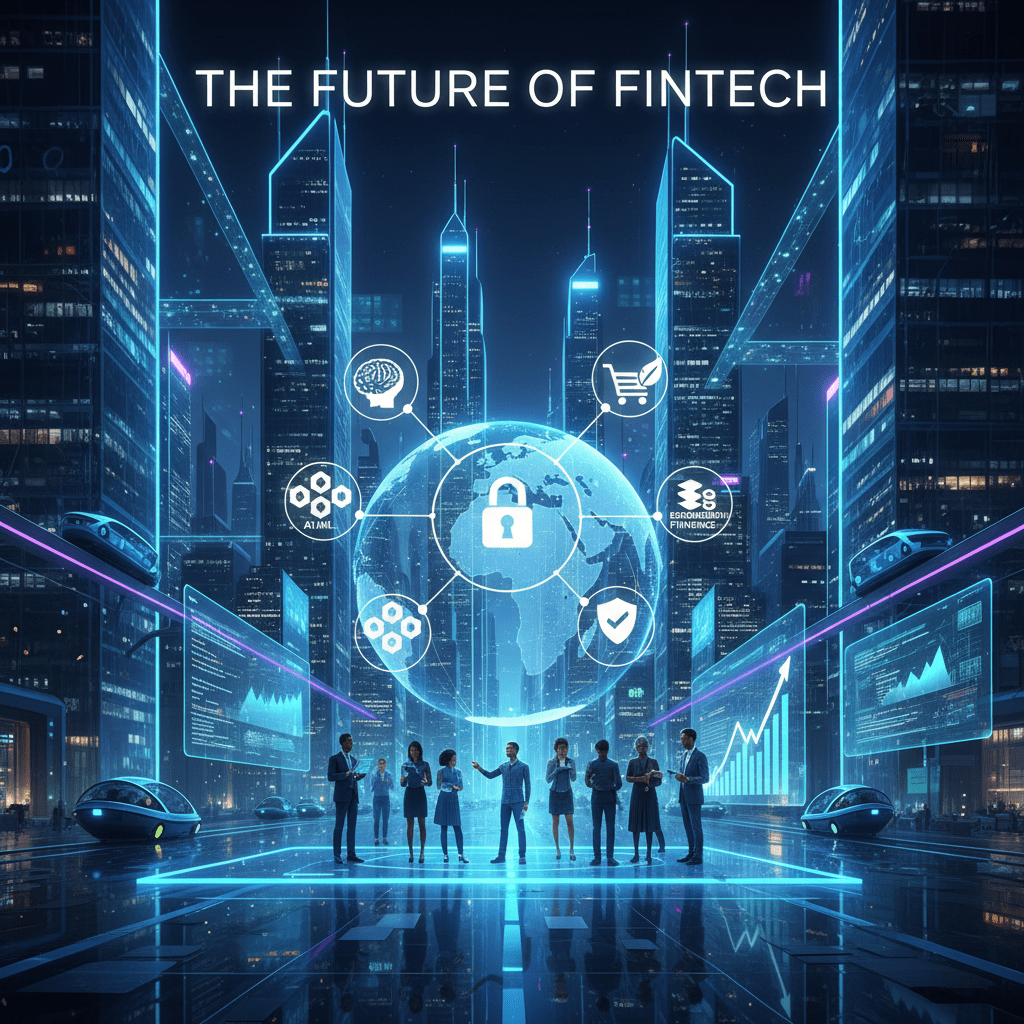
As 2025 unfolds, fintech is no longer the disruptive upstart challenging traditional banks—it has become the foundation of the modern financial ecosystem. Across payments, lending, wealth management, insurance, and regulatory technology, fintech companies are redefining how consumers and businesses interact with money. The trends emerging today are shaping the next generation of financial services, promising a world that is more inclusive, personalized, and efficient.
One of the most significant developments in 2025 is the integration of artificial intelligence into virtually every financial service. AI is no longer limited to predictive analytics or fraud detection—it now drives credit decisions, investment recommendations, personalized budgeting, and even embedded financial services. Machine learning models analyze millions of real-time data points, allowing fintech companies to offer tailored solutions that adapt dynamically to consumer behavior. The result is hyper-personalized financial experiences that traditional banks, constrained by legacy systems, struggle to replicate.
Digital wallets and mobile-first banking remain at the forefront of fintech adoption. Consumers expect instant, frictionless transactions, whether paying for groceries, transferring funds internationally, or investing spare change. Wallets have evolved into financial hubs that integrate payments, credit, micro-investing, savings, and insurance. These all-in-one platforms reduce friction, enhance convenience, and provide financial insights that improve literacy and long-term financial planning.
Embedded finance is also reshaping the landscape. Financial services are now seamlessly integrated into e-commerce, mobility, subscription platforms, and workplace applications. Consumers can access credit, insurance, and investments at the exact moment they need them, often without leaving the app or platform they are already using. This integration transforms finance from a standalone service into an invisible, intelligent layer within daily life, fundamentally altering the role of traditional banks.
Buy Now, Pay Later (BNPL) solutions have matured, becoming a mainstream method of consumer credit. These systems provide flexible installment options for everything from retail purchases to healthcare bills. Coupled with AI-driven risk models, BNPL platforms can extend credit responsibly, reaching consumers previously excluded from the traditional financial system. BNPL has also catalyzed global e-commerce, enabling cross-border trade and new revenue streams for businesses.
Open banking and data portability are empowering consumers in unprecedented ways. By allowing secure, permissioned access to financial data, consumers can aggregate accounts, compare products, and switch providers with ease. This transparency fosters competition, drives innovation, and ensures that financial services evolve in line with consumer needs. In combination with embedded finance and AI, open banking enables highly personalized recommendations, automated budgeting, and smarter credit decisions.
Regulatory technology (RegTech) has emerged as a critical enabler of fintech growth. As financial services digitize and integrate into everyday platforms, regulatory oversight must keep pace. AI-powered compliance systems automate KYC, AML, transaction monitoring, and reporting, allowing firms to scale safely while meeting regulatory requirements. RegTech ensures that innovation and compliance coexist, providing a stable framework for the next generation of financial products.
Global adoption of fintech continues to be uneven but rapidly expanding. North America and Europe lead in regulatory frameworks and technological infrastructure, while Asia-Pacific dominates mobile-first adoption and innovative payment solutions. Latin America and Africa are leapfrogging traditional banking through mobile wallets, embedded credit, and alternative payment systems. The result is a more connected and inclusive global financial ecosystem that transcends borders and traditional institutional limitations.
Cybersecurity remains a central concern in the evolution of fintech. As platforms handle increasingly sensitive financial data and control real-time transactions, the stakes for breaches are higher than ever. Companies invest heavily in encryption, biometric authentication, decentralized identity solutions, and AI-driven threat detection. Trust is the most valuable currency; without robust security measures, fintech adoption could stall, undermining the progress of financial inclusion.
The cultural impact of fintech is also profound. Consumers are more financially literate, empowered, and engaged. Financial services have become intuitive and embedded in daily life rather than abstract, intimidating systems. Millennials and Gen Z, in particular, expect personalization, speed, and transparency, and fintech platforms are meeting and exceeding these expectations. This cultural shift is redefining trust, loyalty, and engagement in the financial sector.
Looking ahead, the next generation of fintech will likely focus on interoperability, sustainability, and financial empowerment. Interoperability ensures seamless integration across platforms and services, reducing friction and enhancing user experience. Sustainable finance, powered by ESG-focused platforms, allows consumers and businesses to align financial decisions with environmental and social values. Financial empowerment, driven by education, AI, and accessible services, promises broader inclusion and wealth creation across diverse populations.
In essence, fintech in 2025 represents a convergence of technology, data, and financial services. It is no longer optional or experimental—it is the infrastructure upon which the future of finance is built. By combining AI, embedded finance, digital wallets, BNPL, open banking, and RegTech, fintech firms are creating a financial ecosystem that is faster, more inclusive, and highly adaptive to consumer needs. The evolution of finance is underway, and 2025 may well be remembered as the year when the foundations of the next-generation financial world were solidified.
About the Author